
Every night you spend a few hours inside stories you never chose to watch. You fly, you run late for exams you graduated from years ago, you talk to people who have been gone for a long time. Then, within minutes of waking, most of it is gone.
People have tried to explain dreams for thousands of years — as messages, omens or windows into hidden desires. Modern sleep science has a different set of tools, and while it has not produced a single final answer, it has narrowed the question considerably.
What happens in the brain while we sleep
Sleep is not a single state. Through the night the brain moves through repeating cycles of non-REM and REM sleep, each lasting roughly 90 minutes. Non-REM sleep deepens in stages, from light drowsiness to slow, deep sleep in which the body recovers and brain waves become large and regular.
Early in the night deep sleep dominates. Towards morning the balance shifts, and REM periods grow longer — which is why the most memorable dreams often seem to come just before the alarm.
REM sleep: the brain at its most active
During rapid eye movement (REM) sleep, brain activity looks surprisingly similar to wakefulness. The eyes dart beneath closed lids, breathing and heart rate become irregular, and most skeletal muscles are temporarily paralysed — a safety mechanism that stops us from acting out what we experience.
REM is when dreams tend to be the most vivid, emotional and story-like. But dreaming is not limited to REM: people woken from non-REM sleep also report dreams, usually shorter and more thought-like.
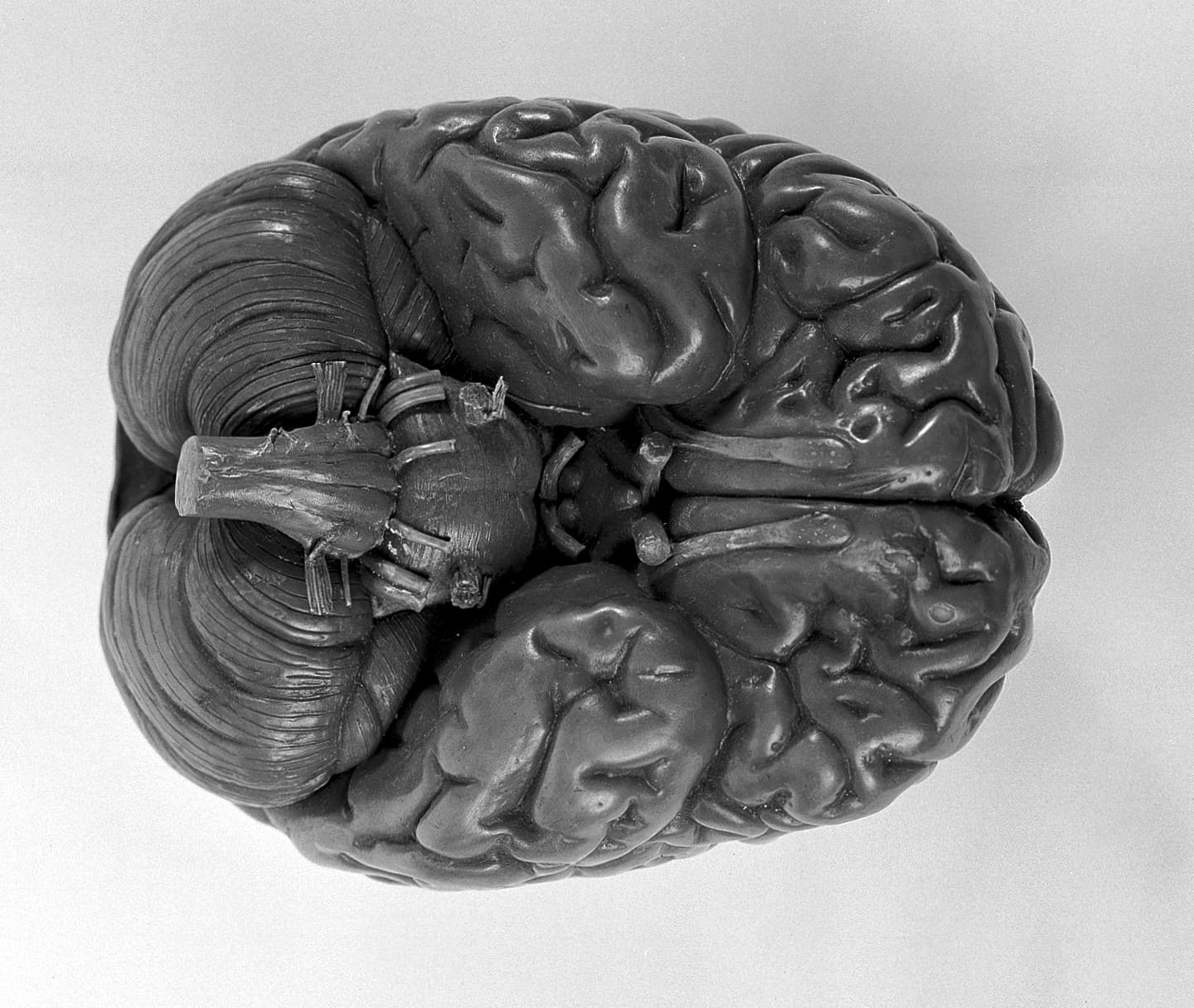
Why do we dream? The leading theories
There is no consensus on a single purpose for dreaming. Instead, researchers have proposed several explanations, and they are not mutually exclusive.
Memory consolidation
Sleep plays a well-established role in strengthening and organising memories. During sleep the brain appears to replay recent experiences and integrate them with older knowledge. Some researchers think dreams are a by-product of this process — fragments of memory being sorted, combined and stored, which would explain why dreams so often mix recent events with distant ones.
Emotional processing
Dreams are frequently intense emotionally. One proposal is that REM sleep helps the brain process emotional experiences, allowing memories to be kept while their emotional sting is softened. This idea is still being tested, but it fits the observation that disturbed REM sleep often accompanies emotional difficulties.
Threat simulation
The threat simulation theory, proposed by the Finnish psychologist Antti Revonsuo, suggests dreams evolved as a rehearsal space: a safe environment to practise responding to danger. It would help explain why chases, falls and conflicts are such common dream themes.
Activation-synthesis
In 1977 the psychiatrists J. Allan Hobson and Robert McCarley proposed that dreams arise when the forebrain tries to make sense of largely random signals from the brainstem during REM sleep. In this view the story is constructed after the fact — the brain doing what it always does, finding meaning in noise.
A dream may be less a message than a by-product — the sound a busy brain makes while it tidies up.
Why most dreams are forgotten
If dreams are so vivid, why do they vanish so fast? Part of the answer is timing: we tend to remember dreams when we wake up during or right after REM sleep. The brain chemistry of sleep also seems to make it harder to store new memories, so unless a dream is rehearsed soon after waking, it fades.
- Wake time matters: waking naturally from REM increases recall.
- Attention matters: people who keep a dream journal report remembering more dreams over time.
- Emotion matters: unusually intense or disturbing dreams are more likely to be remembered.
Lucid dreams: knowing you are dreaming
In a lucid dream the sleeper becomes aware that they are dreaming and can sometimes steer what happens. Lucid dreaming has been studied in sleep laboratories, where trained participants signal from inside a dream using agreed eye movements. In 2021 researchers even reported two-way communication with lucid dreamers, who answered simple questions from within REM sleep.
What dreams can — and cannot — tell us
Dreams draw on our memories, worries and experiences, so it is not surprising that they sometimes feel meaningful. But there is little scientific support for the idea that specific dream symbols have fixed, universal meanings. A dream about teeth falling out is far more likely to reflect common anxieties than a coded prediction.
- Sleep runs in cycles of about 90 minutes, with longer REM periods towards morning.
- Several theories explain dreaming, and more than one may be partly true.
- Better sleep — not dream interpretation — is what science consistently recommends.