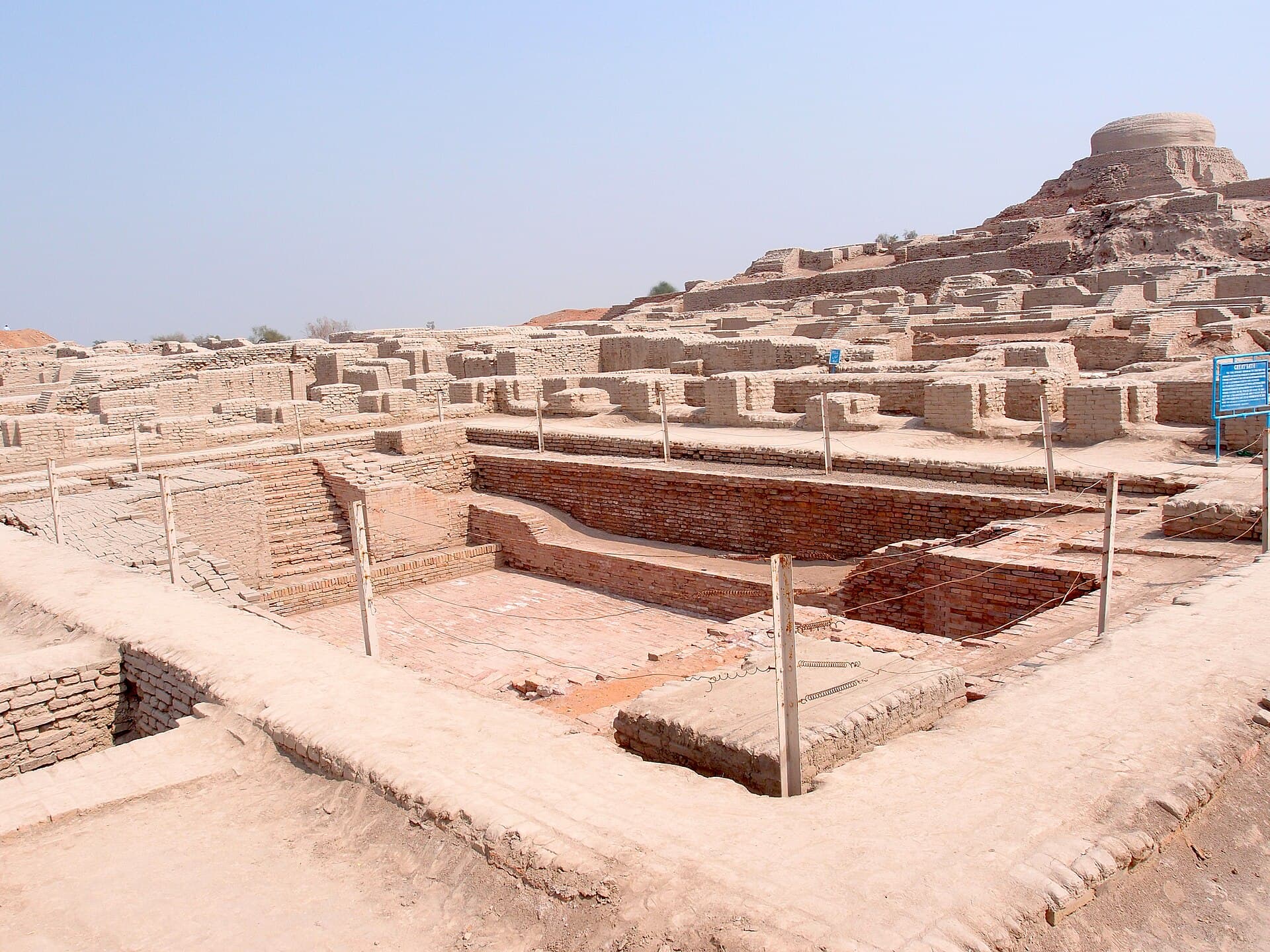
Around 4,500 years ago, one of the world's first great urban civilizations flourished along the Indus River and its tributaries, in what is now Pakistan and north-west India. Its cities were planned, its trade reached Mesopotamia — and yet it is far less famous than Egypt or Sumer.
Cities built on a plan
At sites such as Mohenjo-daro and Harappa, archaeologists found streets laid out in grids, houses with private bathrooms and an extensive system of covered drains. Bricks were made in standard proportions across a vast area, suggesting shared rules and organisation.
- A large public bathing structure at Mohenjo-daro, known as the Great Bath.
- Standardised weights used for trade.
- Seals carrying short inscriptions in a script that has never been deciphered.
A slow disappearance
From around 1900 BCE the great cities declined and people moved towards smaller settlements further east. There is no evidence of a single catastrophe. Researchers point to a combination of factors, including weakening monsoon rains, shifting rivers and changes in trade.


